
Analytical, Critical, and Creative Thinking in UX: How to Combine Them for Better Decisions
When a team says it needs to “think better,” it often blends different activities: understanding a problem, producing options, organizing evidence, challenging assumptions, and choosing what to do. All of them belong in design work, but they do not answer the same question or work well at the same time.
A session can fail because the team critiques while trying to create. Analysis can continue indefinitely because nobody named the decision it was meant to enable. An attractive idea can move forward without evidence that it addresses the problem. The issue is not always a missing tool; often, the wrong mode of thinking is active at the wrong moment.
This framework combines five glossary concepts as parts of one path:
- Problem solving to orient the change being pursued.
- Creative thinking to expand possibilities.
- Analytical thinking to create structure and compare.
- Critical thinking to examine evidence and assumptions.
- Decision making to turn reasoning into action.
They are not rigid stages or personality types. They are modes a team can activate, separate, and recombine according to what it needs to learn.
The problem with using one mode for everything
Imagine that an application loses many people during onboarding. The team proposes removing fields, adding a tutorial, introducing social login, or letting people try the product before registering.
If it immediately evaluates each proposal, the conversation becomes defensive and produces few alternatives. If it generates ideas for hours without defining what improvement means, it ends with a full wall and no direction. If it asks for more research without identifying which decision the findings could change, analysis has no stopping condition.
Each mode addresses a different risk:
| Question | Predominant mode | Risk it reduces |
|---|---|---|
| Which situation are we trying to change? | Problem solving | Solving a symptom or a question that is too vague |
| What other possibilities exist? | Creative thinking | Fixating on the first available solution |
| How do the elements and alternatives relate? | Analytical thinking | Comparing impressions without structure |
| How strong is the evidence, and what are we assuming? | Critical thinking | Treating a compelling story as a fact |
| What will we do, who will do it, and when will we review it? | Decision making | Mistaking conversation for progress |
1. Frame: What change are we trying to create?
Problem solving provides direction. Before considering solutions, separate the observed situation from its explanation and from the desired outcome.
For onboarding:
- Observation: 42% of people leave before completing registration.
- Possible explanations: the form feels intrusive, product value is not yet clear, a technical error exists, or the requested information is difficult to provide.
- Desired change: help more people experience value without increasing operational or privacy risks.
This separation prevents “the form is too long” from becoming a premature fact. It also allows the team to recognize that several problems may exist beneath one indicator.
A useful frame does not prescribe the answer. It defines population, context, behavior, and consequence while leaving room to discover causes and alternatives.
2. Diverge: What options are we not seeing yet?
Creative thinking opens the space. Its first purpose is not selection, but escape from the false choice between the favorite solution and doing nothing.
The team could explore different families of response:
- reduce or postpone data collection;
- explain why each piece of information is needed;
- change the sequence of the experience;
- enable a trial without an account;
- retrieve information from another source with consent;
- change the internal process that makes those fields necessary;
- support registration with contextual assistance.
Diversity matters more than collecting variations of the same screen. Force categories such as content, interaction, process, policy, human support, and deliberate non-intervention. Or reverse an assumption: “What would we do if we could not request any information before showing value?”
Detailed criticism should pause during this phase. Not because every idea is good, but because a weak proposal can contain a useful property or combine with another one.
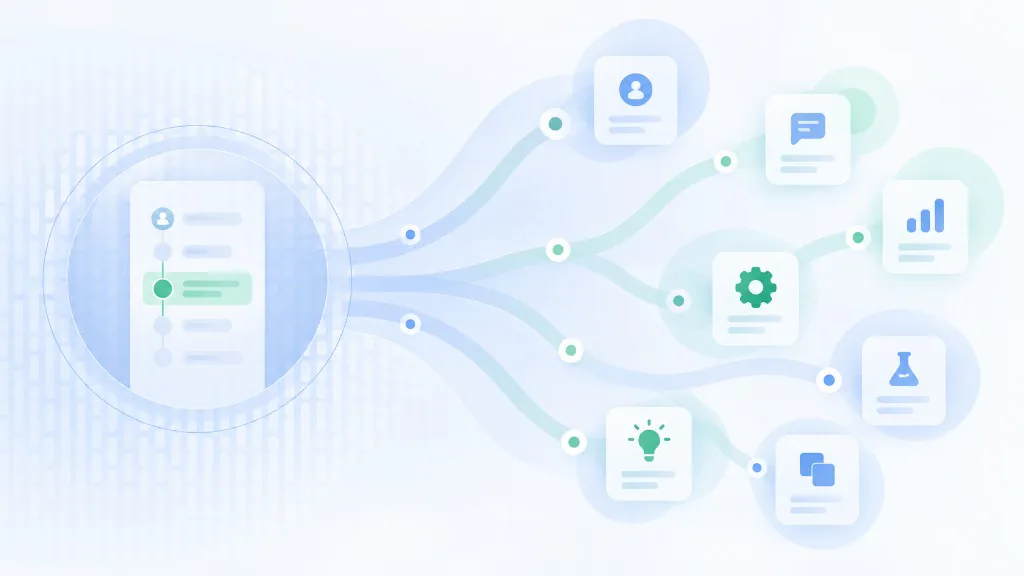
3. Structure: What do we know about the options?
Analytical thinking turns a set of possibilities into a map. It decomposes, finds relationships, and creates comparable dimensions.
For onboarding, a matrix might include:
- friction for the person;
- value available before registration;
- data that is genuinely necessary;
- operational and business impact;
- technical effort;
- accessibility;
- privacy and security;
- reversibility;
- learning potential.
The matrix does not make the decision automatically. It reveals differences and tensions that were previously mixed together. It also separates evidence from estimates: analytics may show abandonment, while its causes remain inferred.
Analysis does not always require a long document. It means the team can explain which components it is comparing and why they matter.

4. Challenge: What could make our reasoning fragile?
Critical thinking examines the quality of the map. It asks where evidence came from, which competing explanation was ignored, and which assumptions must hold for a proposal to work.
Useful questions include:
- Does abandonment result from the number of fields, or does it coincide with a technical error?
- Do interview participants represent the people who left?
- Are we selecting data that confirms a preferred solution?
- Who might be excluded by the change?
- Which cost or consequence are we transferring to support, sales, or users?
- What evidence would change our minds?
Critical thinking is not attacking ideas or demonstrating intelligence by finding faults. It improves the reliability of what the team is prepared to believe and do.

5. Decide: Which commitment produces the next learning?
Decision making provisionally closes the cycle. The team states the choice, assigns accountability, and defines how consequences will be observed.
For example:
For two weeks, we will let a segment of new users explore the product before requesting profile data. We chose this option because it reduces friction, is reversible, and lets us measure activation without changing commercial operations yet. We will review activation, profile completion, support requests, and accessibility issues.
This statement contains more than a preference. It defines scope, criteria, an implied owner, a horizon, and review signals.
Deciding does not remove uncertainty. It determines which uncertainty the team accepts and which action can produce information it does not currently have.
The complete cycle
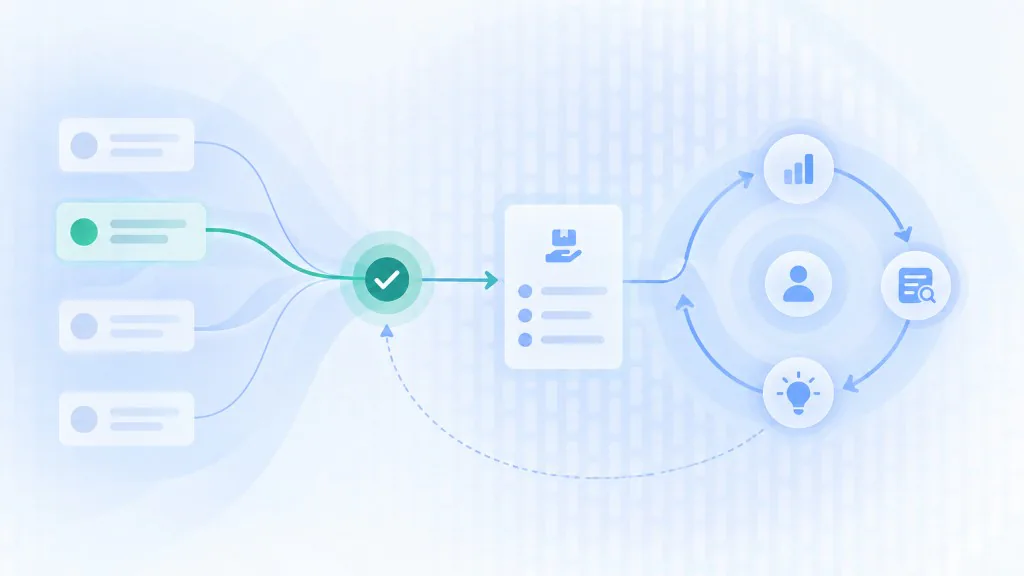
The path can be summarized as:
- Frame: separate observation, explanation, and desired change.
- Diverge: produce families of alternatives before evaluating them.
- Structure: compare relationships, constraints, and consequences.
- Challenge: review evidence, assumptions, exclusions, and competing explanations.
- Decide: choose an action proportional to risk and record what would change it.
- Learn: observe results and reopen the cycle when reality contradicts the map.
The path is not always linear. Analysis may reveal that the problem was framed incorrectly. Critique may show that alternatives are missing. A prototype may force the team back into research. Discipline means recognizing which mode the work needs now.

Facilitate without mixing moments
In workshops and meetings, make the change of mode explicit:
- “For ten minutes, we will produce options without evaluating them.”
- “Now we will cluster them and define criteria.”
- “Let’s look for evidence against our two favorite alternatives.”
- “This is the decision we need to close today.”
It also helps to separate temporary roles from identities. There is no permanent “creative person” and “analytical person.” The same participant can propose during divergence, structure during analysis, and challenge during review.
Signs of imbalance
- High creativity, low decision: new ideas appear, but none receives an owner, criteria, or next step.
- High analysis, low exploration: the team carefully compares alternatives that are almost identical.
- High criticism, low construction: every proposal dies before it can evolve.
- High decision, low framing: the team moves quickly on a symptom or an untested explanation.
- High process, low learning: activities are completed, but nobody can explain how understanding changed.
Balance does not mean spending equal time on everything. A reversible choice can move through the cycle in an hour. A hard-to-reverse transformation may require weeks of research, participation, and validation.
A short template for everyday work
Before closing a UX discussion, complete:
- Observed situation:
- Change being pursued:
- Alternatives considered:
- Available evidence:
- Assumptions and risks:
- Choice criteria:
- Decision and owner:
- What will be measured or learned:
- Review date:
The template does not replace thinking. It prevents its results from remaining implicit.
Closing
Thinking better in UX does not always mean adding more analysis, ideas, or research. It means recognizing the intellectual operation the work needs at each moment.
Problem solving orients. Creative thinking opens. Analytical thinking structures. Critical thinking tests. Decision making commits. Together, they form a system that supports progress without turning intuition into evidence or uncertainty into paralysis.